
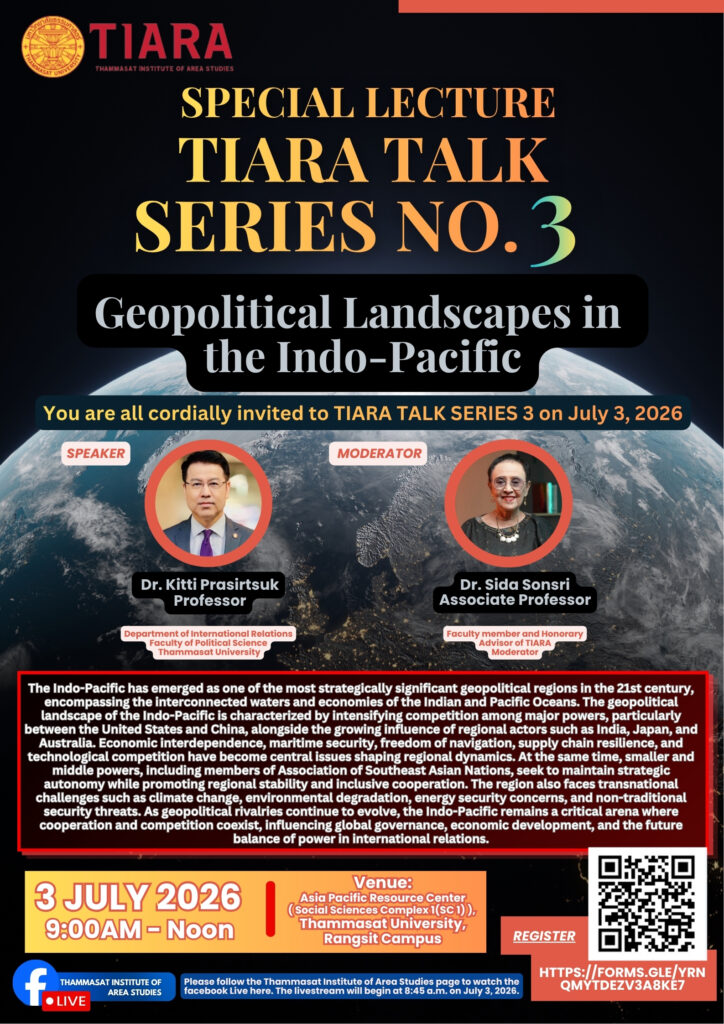
TIARA Talk Series No. 3
“Geopolitical Landscapes in the Indo-Pacific”
 วันศุกร์ที่ 3 กรกฎาคม 2569
 เวลา 09.00–12.00 น.
 Asia Pacific Resource Center (SC 1 อาคารเรียนรวม) , มธ. ศูนย์รังสิต
พบกับการบรรยายพิเศษโดย ศาสตราจารย์ ดร.กิตติ ประเสริฐสุข
อาจารย์ประจำคณะรัฐศาสตร์ มหาวิทยาลัยธรรมศาสตร์
ดำเนินรายการโดย รศ.ดร.สีดา สอนศรี
 ลงทะเบียนเข้าร่วม: https://forms.gle/yrNqMyTdeZv3A8Ke7
“อินโด-แปซิฟิกในศตวรรษที่ 21
ภูมิภาคอินโด-แปซิฟิกได้กลายเป็นพื้นที่ยุทธศาสตร์สำคัญที่สุดแห่งหนึ่งของโลก ท่ามกลางการแข่งขันระหว่างมหาอำนาจอย่างสหรัฐฯ และจีน รวมถึงบทบาทที่เพิ่มขึ้นของอินเดีย ญี่ปุ่น และออสเตรเลีย ประเด็นหลักที่กำหนดพลวัตภูมิภาค ได้แก่ ความมั่นคงทางทะเล เสรีภาพในการเดินเรือ ความเชื่อมโยงทางเศรษฐกิจ ความยืดหยุ่นของห่วงโซ่อุปทาน และการแข่งขันด้านเทคโนโลยี ขณะเดียวกัน ประเทศขนาดกลางและเล็ก โดยเฉพาะสมาชิกอาเซียน พยายามรักษาอิสระเชิงยุทธศาสตร์ ควบคู่กับการส่งเสริมเสถียรภาพและความร่วมมือที่ครอบคลุม ภูมิภาคยังเผชิญความท้าทายข้ามพรมแดน เช่น การเปลี่ยนแปลงสภาพภูมิอากาศ ความมั่นคงด้านพลังงาน และภัยคุกคามรูปแบบใหม่ ทำให้อินโด-แปซิฟิกเป็นเวทีที่การแข่งและการร่วมมือดำเนินไปพร้อมกัน และมีผลต่อการกำกับดูแลโลก เศรษฐกิจ และดุลอำนาจในอนาคต”
📢📢📢📢 สามารถรับชมการ livestream ผ่าน Facebook Live ได้ที่เพจ Thammasat Institute of Area Studies โปรดกดติดตามเพจ เพื่อรับชมได้ก่อนใคร 📢📢📢📢
////////////////////////////////////////////////////////////////////////////////////////////////////////////////
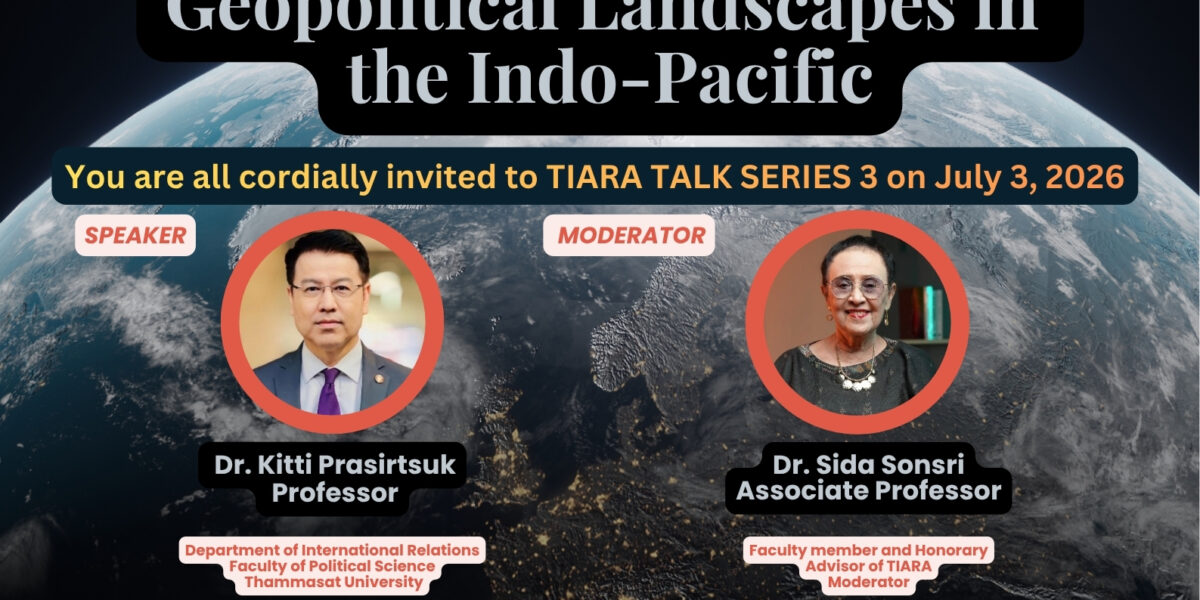
You are all cordially invited to TIARA TALK SERIES 3 on July 11, 2026
TIARA Talk Series No. 3
“Geopolitical Landscapes in the Indo-Pacific”
Friday, July 3, 2026
09:00–12:00 hrs
Asia Pacific Resource Center, Thammasat University, Rangsit Campus
Join us for a special lecture by Professor Kitti Prasirtsuk, Ph.D.
Moderated by Assoc. Prof. Dr. Sida Sonsri
Register here: https://forms.gle/yrNqMyTdeZv3A8Ke7
“The Indo-Pacific has emerged as one of the most strategically significant geopolitical regions in the 21st century, encompassing the interconnected waters and economies of the Indian and Pacific Oceans. The geopolitical landscape of the Indo-Pacific is characterized by intensifying competition among major powers, particularly between the United States and China, alongside the growing influence of regional actors such as India, Japan, and Australia. Economic interdependence, maritime security, freedom of navigation, supply chain resilience, and technological competition have become central issues shaping regional dynamics. At the same time, smaller and middle powers, including members of Association of Southeast Asian Nations, seek to maintain strategic autonomy while promoting regional stability and inclusive cooperation. The region also faces transnational challenges such as climate change, environmental degradation, energy security concerns, and non-traditional security threats. As geopolitical rivalries continue to evolve, the Indo-Pacific remains a critical arena where cooperation and competition coexist, influencing global governance, economic development, and the future balance of power in international relations.”
📢📢📢📢 You can watch the livestream via Facebook Live on the Thammasat Institute of Area Studies page. Please follow the page to be the first to watch! 📢📢📢📢